

Introduction
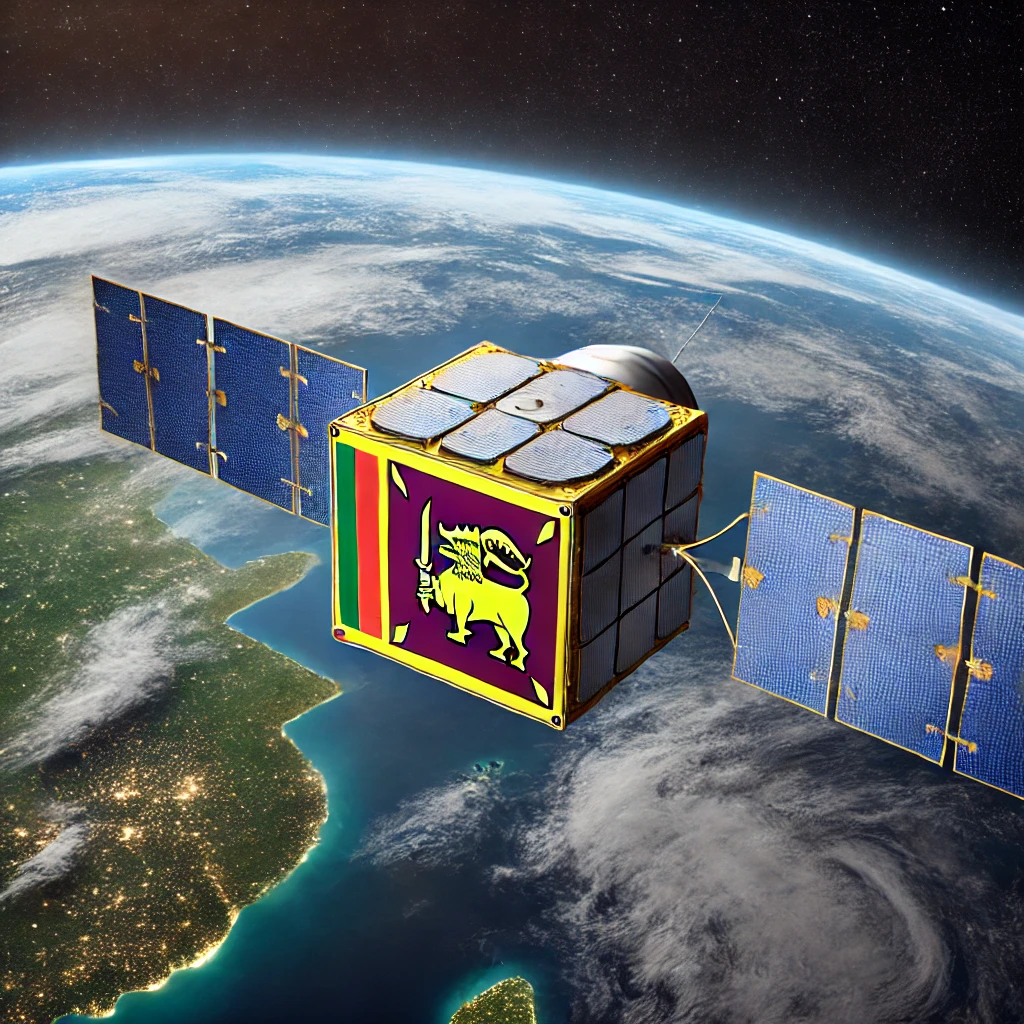
Sri Lanka marked its entry into the global space industry with the launch of RAAVANA-1, the country’s first-ever satellite. This significant milestone in Sri Lankan scientific advancement symbolizes a major step toward space research and technology development. The satellite was designed and developed by a team of Sri Lankan engineers and was launched into space in 2019, making history as the nation’s maiden attempt at space exploration.
The Birth of RAAVANA-1
- RAAVANA-1 was developed as a part of the BIRDS-3 satellite project, an international initiative led by the Kyushu Institute of Technology (Kyutech) in Japan. The project aimed to help developing countries build and launch their first satellites, providing hands-on experience in satellite technology.
A team of Sri Lankan engineers, including Tharindu Dayaratne and Dulani Chamika, postgraduate students at Kyutech, played a key role in designing and constructing RAAVANA-1.
The satellite was named after King Ravana, a legendary figure in Sri Lankan mythology known for his advanced knowledge of aviation and science.
Technical Specifications
- RAAVANA-1 is a 1U CubeSat, a small satellite roughly the size of a 10 cm³ cube and weighing about 1.1 kg. Despite its small size, it was equipped with important functionalities, including:-
- Camera technology to capture images of Sri Lanka from space.
- Attitude Determination and Control System (ADCS) to help maintain its orientation.
- LoRa (Long Range) communication technology, which allows the satellite to communicate with ground stations.
- Data transmission capabilities for scientific experiments and educational purposes.
- Camera technology to capture images of Sri Lanka from space.
Launch and Deployment
- RAAVANA-1 was launched on April 17, 2019, aboard a Cygnus NG-11 spacecraft from NASA’s Wallops Flight Facility in the United States. It was carried to the International Space Station (ISS) and later deployed into orbit on June 17, 2019, from the Japanese Kibo module.
- The satellite was placed in Low Earth Orbit (LEO), approximately 400 km above Earth, where it remained operational for about one and a half years before re-entering the Earth’s atmosphere and burning up.
Significance of RAAVANA-1
- The launch of RAAVANA-1 was a groundbreaking achievement for Sri Lanka, demonstrating the country’s potential in space technology. It:
- Inspired a new generation of Sri Lankan scientists and engineers to pursue careers in aerospace and satellite development.
Established Sri Lanka’s presence in space, opening the door for future satellite missions. - Contributed to global research efforts in satellite technology and communication systems.
- Inspired a new generation of Sri Lankan scientists and engineers to pursue careers in aerospace and satellite development.
Future of Sri Lanka’s Space Exploration
- Following the success of RAAVANA-1, Sri Lanka aims to expand its space research initiatives and develop more advanced satellites.
- The mission has sparked discussions about RAAVANA-2, a potential successor that could carry out more sophisticated experiments and provide practical applications for the country, such as disaster monitoring, climate research, and communication enhancement.
Conclusion
- RAAVANA-1 was a pioneering effort that marked Sri Lanka’s official entry into the realm of space technology. Although it was a small satellite, its impact was significant, proving that Sri Lanka has the capability and expertise to contribute to the ever-expanding field of space exploration.
- The success of RAAVANA-1 serves as a foundation for future missions, encouraging innovation and positioning Sri Lanka as an emerging player in the global space industry.